How to Choose a Drawer Dishwasher for an RV
An RV dishwasher drawer must fit your cabinet opening, clear nearby doors and drawers, and meet the installation needs of your RV. Measure the space and check water, drainage, power and weight limits before choosing.
On this page (9 sections)
- Is a drawer dishwasher a good fit for an RV?
- What should you measure before choosing an RV dishwasher drawer?
- How do water supply and drainage affect the choice?
- What power and weight checks matter in a camper?
- Which countertop alternatives may suit an RV?
- How can you compare drawer and countertop setups?
- What installation requirements should you check?
- What should you choose for your RV kitchen?
- Frequently asked questions
An RV dishwasher drawer must fit your cabinet opening, clear nearby doors and drawers, and meet the installation needs of your RV. Measure first, then confirm water, drainage, power and weight requirements with the appliance and RV manufacturers.
A drawer design can save counter space, but the cabinet must support its weight and allow the drawer to move freely. A countertop model may be easier to place, though it still needs a stable surface and a workable water and drain setup.
Start with RV dishwasher sizes to compare the space different formats need. Then use this guide to decide whether a drawer is practical for your floor plan.
Is a drawer dishwasher a good fit for an RV?
A drawer dishwasher can suit an RV when a cabinet bay has enough room for the unit, open-drawer access and installation connections. It is a poor fit if installing it blocks storage, weakens a cabinet or requires plumbing and electrical changes the RV cannot support.
Check the appliance manual for cutout dimensions, required clearances, mounting details and service access. Check the RV manual or ask the manufacturer about cabinet structure, power supply and plumbing limits.
A drawer unit may put dishes at a convenient working height, depending on its location. However, it takes up fixed cabinet space and can add weight in one area, so consider both the loaded appliance and the cabinetry beneath it.
Compare the built-in approach with our best built in RV dishwasher guide if you are considering a permanent installation. If you want to avoid altering a cabinet, compare portable dishwashers for an RV.
What should you measure before choosing an RV dishwasher drawer?
Measure the full opening and the space around it, including the route for hoses, wiring and service access. A unit that fits the cutout can still fail to fit your daily layout if its drawer hits a cabinet door or blocks an aisle.
Measure the cabinet opening at the front and back, and check width, height and depth at several points. Note trim, handles, nearby pipes and any uneven surfaces that may reduce usable space.
Then measure the drawer's full extension. Open nearby cabinet doors and appliance doors while it is extended to see if they collide or leave too little room to stand.
Record these details before shopping:
- Cabinet opening width, height and depth
- Space needed for the drawer to open fully
- Clearance from the floor, counter and nearby doors
- Space for water and drain connections behind or beside the unit
- Access needed for filters, hoses and repairs
- The cabinet's ability to support the appliance and its contents
Include the weight of water and dishes when checking the cabinet and RV limits. Ask the RV maker or a qualified installer if you cannot confirm that the structure can support the load.
How do water supply and drainage affect the choice?
An RV dishwasher needs a safe water supply and a drain route that match the appliance instructions. Confirm where water enters and wastewater goes before you choose a built-in or portable model.
A built-in drawer may require fixed connections. Check whether the RV has a suitable hot or cold water connection, shutoff access and drain arrangement for the appliance.
Don't assume a kitchen faucet connection will work with a built-in unit.
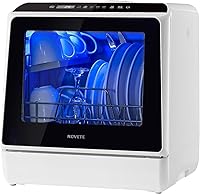
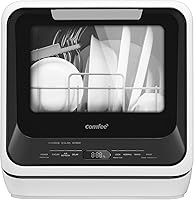
Portable models can offer a different setup. The NOVETE and HAVA models below have a built-in 5 L tank and a faucet supply option, while the COMFEE' connects to a faucet with a suitable adaptor.
Tank operation avoids a permanent faucet connection, but you still need a safe drain location.
Plan how you will secure hoses during travel and prevent leaks when the RV is parked. Follow both appliance and RV instructions, and don't use an improvised connection that could loosen or drain wastewater where it shouldn't.
What power and weight checks matter in a camper?
Check the dishwasher's electrical requirements against the RV's available supply and the appliance manual. Confirm the circuit and inverter can support its load, including other appliances that may run at the same time.
The product choices below include countertop models, not built-in drawer units. Their stated power consumption is 950 W for NOVETE and HAVA; COMFEE' information here does not specify power consumption, so confirm it with the brand before planning a connection.
Also check where the appliance's weight will sit. A full water tank, dishes and the unit itself add load to the counter or cabinet, and road movement can put extra strain on mounting points.
Follow RV guidance for appliance placement and securement.
Which countertop alternatives may suit an RV?
A countertop dishwasher may be a practical alternative when you have a stable surface and want to avoid a permanent drawer installation. Compare its size, water setup and dish capacity with your available counter space and daily load.
Its double-layer design holds 4 place settings, and it fits dishes up to 12 in when loaded at an angle. The included inlet and drain hoses give you options for setup, but check hose routing and counter support in your RV.
It holds up to 4 place settings and fits dishes up to 11 in when loaded at an angle. The tank mode can help if you don't want a permanent faucet connection, while the drain hose still needs a secure destination.
Its dimensions are about 21.7 in wide, 19.7 in deep and 17.2 in high. That larger footprint may suit an RV with a dedicated cabinet or counter space, but check the full installation and clearance requirements first.
How can you compare drawer and countertop setups?
Compare the formats by installation effort, space and daily access. A drawer model uses a dedicated cabinet opening; a countertop model uses a surface or cupboard space and may need a faucet or tank setup.
| Check | Drawer dishwasher | Countertop dishwasher |
|---|---|---|
| Main space needed | Cabinet cutout and drawer extension | Countertop or suitable cupboard space |
| Water setup | Usually fixed connection; check manual | May use a tank or faucet, depending on model |
| Drain setup | Confirm fixed drain requirements | Route and secure the supplied drain hose as instructed |
| Installation | Cabinet support and appliance connections | Stable placement and hose access |
| Travel use | Must be installed and secured for RV use | Must be stowed or secured safely before travel |
These are general format differences. The exact requirements vary by model, so use the installation manual rather than assuming every dishwasher in a category connects the same way.
A drawer is worth considering when you have a suitable cabinet bay and want the appliance integrated into the kitchen. A countertop model is easier to assess for a temporary setup, but it still needs a safe place to operate and store while driving.
What installation requirements should you check?
Check the manufacturer’s installation instructions and the RV’s appliance and plumbing guidance before making any changes. Get help from a qualified RV technician when a connection, cutout or load limit is unclear.
Confirm these requirements for the specific model:
- Required cabinet opening and minimum clearances
- Mounting hardware and support surface
- Water inlet type, shutoff and hose routing
- Drain connection or approved hose placement
- Electrical supply, circuit and grounding
- Ventilation and access for service
- Weight limits and securement for travel
Keep the appliance manual with your RV records. If the model requires a modification, confirm that the change won't interfere with wiring, plumbing, structural supports or access to other equipment.
What should you choose for your RV kitchen?
Choose an RV dishwasher drawer when the cabinet opening, structure, water supply, drain and power all match the model's requirements. Choose a portable countertop option when you have a stable surface and its water and drain setup works with your RV.
Before buying, write down the exact opening measurements and check them against the installation manual. If any connection or weight limit is uncertain, ask the appliance maker or RV manufacturer to confirm it.
For a permanent cabinet installation, compare the requirements in our built-in RV dishwasher guide. If you prefer a movable setup, use our portable RV dishwasher picks to compare options.
Frequently asked questions
Can you use a dishwasher while an RV is moving?
Don't run a dishwasher while the RV is moving unless both the appliance and RV manufacturers explicitly allow it. Water, dishes and moving parts can shift, and a drain or supply hose could loosen.
Secure the appliance and its connections for travel, then follow the manual for stationary operation.
Does a countertop dishwasher need a permanent hookup?
Not always. The NOVETE and HAVA models described here have built-in 5 L tanks as well as faucet supply options.
Check the instructions for the exact model, and plan a secure drain route and safe place for the machine while it runs.
Should an RV dishwasher drawer be installed by an RV technician?
Use a qualified RV technician if the installation requires cutting cabinetry, changing plumbing or wiring, or confirming structural support. A professional can help check the vehicle-specific limits and follow the appliance installation instructions.
How much clearance does an RV dishwasher drawer need?
There is no single clearance that fits every drawer model. Use the installation manual's cutout and clearance requirements, then check the full drawer extension against nearby doors, counters and walkways.
Leave the specified room for hoses, ventilation and service access.
Pick a drawer dishwasher only when its cutout and connections fit the RV; pick a countertop model when its footprint and hose setup fit your routine. Compare RV dishwasher sizes before settling on a format.
Frequently asked questions
Can you install a drawer dishwasher in an RV?
A drawer dishwasher can work in an RV if the cabinet, plumbing, drain route, electrical supply and weight limits all support it. Measure the opening and clearances, then confirm the exact installation requirements with the appliance maker and RV manufacturer before modifying cabinetry or plumbing.
Are countertop dishwashers easier to use in an RV?
A countertop dishwasher can avoid permanent plumbing changes when it has a tank mode, but it still needs a stable surface, safe power and a place to drain. Check its dimensions, filled water weight, hose path and setup instructions against your RV layout before choosing.
What should I measure for an RV dishwasher drawer?
Measure the cabinet opening at several points, plus the appliance depth, height and width. Include room for the drawer to open, nearby cabinet doors, hose bends, ventilation and service access.
Compare those measurements with the installation manual's requirements before ordering.
Can an RV dishwasher drain into the sink?
Some portable dishwashers use a drain hose that empties into a sink, but follow the model's instructions and secure the hose against movement. A built-in unit may need a fixed drain connection.
Check the drain route, trap arrangement and RV plumbing guidance before setup.