Do Dishwashers Use Less Water Than Hand Washing?
A full dishwasher load usually uses less water than washing the same dishes by hand, especially if you leave the tap running. How much you save depends on the machine, cycle, load size, and hand-washing method.
On this page (7 sections)
- Do dishwashers use less water than hand washing?
- How should you compare the two methods?
- When does hand washing use less water?
- Can a countertop dishwasher save water in a small kitchen?
- Which dishwasher habits help reduce water use?
- What products help maintain a dishwasher routine?
- Which routine should you choose to use less water?
A full dishwasher load usually uses less water than washing the same dishes by hand, particularly when the tap stays on during scrubbing and rinsing. The comparison changes with load size, cycle, machine, and whether you hand wash in a basin or under running water.
For the fairest comparison, count the dishes and use the same routine each time. A compact machine can suit a small kitchen, but it still needs a reasonably full load to make each cycle useful.
Do dishwashers use less water than hand washing?
Usually, a full machine load uses less water than washing the same dishes under a running tap. Efficient dishwashers reuse a set amount of water through a cycle, while an open tap can keep flowing through the whole hand-washing session.
That does not mean every dishwasher cycle beats every hand-washing method. A filled basin and a careful rinse can use less water for a few items, while running a partly filled machine for a handful of cups may be a poor use of its cycle.
Water-saving habits matter in both cases. Scrape food into the trash or compost, avoid leaving the tap running while you scrub, and run the dishwasher when you have enough dishes for a load.
For more context on a compact machine's daily role, see What Is a Countertop Dishwasher in Everyday Use?.
How should you compare the two methods?
Compare the same number and type of dishes, then compare the water used from start to finish. Include pre-rinsing, washing, and rinsing by hand, along with the dishwasher cycle you would actually use.
A simple home comparison can help:
- Gather a typical day's dishes, such as plates, cups, and cutlery.
- Choose either your normal hand-washing method or a full dishwasher load.
- For hand washing, note whether you fill a basin or leave the tap running.
- For a machine, check its stated water use for the selected cycle.
- Repeat with similar loads before deciding which routine works better.
A dishwasher's stated cycle use is a useful reference, but it doesn't reflect extra water you might use to pre-rinse. Likewise, a hand-washing estimate only helps if it matches your actual tap and basin habits.
Does a dishwasher use less water when you skip pre-rinsing?
Skipping routine pre-rinsing can avoid adding sink water to the machine's total. Scrape off large food scraps first, then follow the dishwasher manual and detergent directions.
If you rinse each dish under the tap before loading, include that water in your comparison. Some people rinse out of habit, even when scraping and the selected cycle are enough for the dishes they have.
When does hand washing use less water?
Hand washing can make sense for a few items when you use a filled basin and rinse efficiently. It may also be practical when a machine would run nearly empty just to clean a small number of dishes.
Fill one basin for washing and use a controlled rinse, or use a second basin if that fits your routine. Avoid letting a hot tap run continuously while you scrub each plate.
For a larger batch, the running tap can make hand washing less efficient. The key is the total water used, not whether the dishes went through a machine.
Can a countertop dishwasher save water in a small kitchen?
A countertop dishwasher can save water compared with a running-tap routine if its cycle cleans a similar batch using less water. Check the model's cycle information and consider how often you can fill it before running it.
Capacity and loading habits shape the result. A machine that is too small for your usual dishes may require frequent cycles, while a properly filled load makes better use of each cycle.
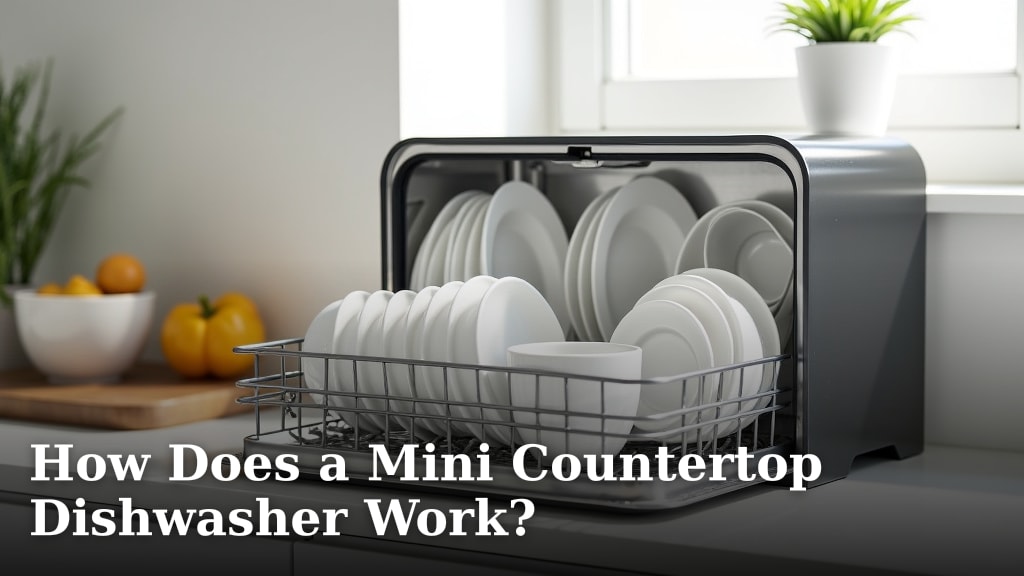
Some countertop models connect to a faucet, while others use a tank. Learn how a mini countertop dishwasher works before deciding which setup fits your kitchen.
Tank models require you to add water for each cycle. This guide to water-tank countertop dishwashers explains the basic arrangement, and a portable countertop dishwasher with a water tank may suit a kitchen without a convenient faucet connection.
How much water does a countertop dishwasher use?
There isn't one water-use figure for every countertop dishwasher. Check the exact model and cycle information, then compare it with the amount you use at the sink for a similar batch.
A product's stated cycle use is only part of the picture if you run it half full or rinse dishes first. For a broader look at the factors, read Do Countertop Dishwashers Use a Lot of Water?.
Which dishwasher habits help reduce water use?
Run a full load, scrape rather than rinse, and choose a cycle that matches the soil level. These habits reduce avoidable water use without requiring a change to hand washing or a new appliance.
Leave space around dishes so spray can reach the surfaces. Follow the manual's loading directions, because blocked spray arms can leave dishes dirty and lead to another cycle or hand washing.
If you're deciding whether a compact machine suits your routine, Do Countertop Dishwashers Really Work in Everyday Use? covers everyday fit and trade-offs.
Can detergent help avoid a second wash?
Use detergent made for dishwashers and follow the machine's directions to reduce the chance of a poorly cleaned load. A suitable detergent does not replace correct loading or the right cycle.
Finish Powerball Dishwasher Pods are pre-measured tablets, and Finish says they cut through grease and scrub dried-on food without a need to pre-soak or pre-rinse. Use them only as directed for your machine.
The Bosch Finish SGZ9091UC Dishwasher Salt is dishwasher-specific salt intended to support the water softener in compatible 800 Plus and ADA (SGE) dishwasher SKUs. Check your model's instructions before choosing salt, since this product is limited to those dishwasher lines.
What products help maintain a dishwasher routine?
Choose supplies that match your machine and the task you need to handle. Detergent and salt are relevant to washing, while a door spring kit is a repair part for select full-size dishwashers.
The Bosch 00754866 Door Spring Kit includes 2 springs and 2 cables to help balance and support the door as it opens and closes. It fits only select Bosch, Thermador, and Gaggenau models, so check your model number before considering it.
A door spring kit does not reduce water use, but a door that opens and closes as intended can make loading and unloading more manageable. It is not a general-purpose part for countertop dishwashers.
Which routine should you choose to use less water?
Choose a full dishwasher load when you have enough dishes, and use a filled basin for a few items when that is more efficient. Your own tap habits and the machine's cycle details determine which method uses less water at home.
If you leave the tap on while washing, a dishwasher is likely to be the more water-conscious choice for a full batch. If you wash a small number of items in a basin, hand washing may use less.
For a compact machine, compare its cycle use with your usual sink routine and run it when full. That is the clearest way to judge whether your dishwasher uses less water than hand washing.
Frequently asked questions
Do dishwashers use less water than hand washing?
Often, yes, when you run a full dishwasher load and compare it with washing the same dishes under a running tap. The result depends on the machine and cycle, how much water you use at the sink, and whether you wash a few items or a full day's dishes.
Is hand washing more water efficient if I use a basin?
It can be, especially for a small number of dishes, if you use a filled basin and avoid running water while scrubbing and rinsing. For a larger batch, compare the total water in both basins with the dishwasher's stated cycle use and consider how many dishes each method cleans.
Should I rinse dishes before putting them in a dishwasher?
Scrape off food and follow your dishwasher's instructions; routine pre-rinsing may use extra water. Some cycles and detergents are designed to clean dishes without pre-rinsing, but heavily soiled cookware or specific machine guidance may call for a different approach.
Does a countertop dishwasher save water?
A countertop dishwasher may use less water than hand washing a similar batch, but the answer depends on its cycle and how you wash by hand. Check the machine's water-use information, load it fully, and compare with your own sink routine rather than assuming every model saves the same amount.