How to Choose a Built-In Dishwasher for an RV
The best built in RV dishwasher is one that fits the cabinet, can be secured for travel, and works with the RV’s water, drain and electrical systems. Measure the opening and check the appliance manual and RV limits before buying.
On this page (9 sections)
- What should you check before choosing a built-in RV dishwasher?
- Is a drawer dishwasher a good fit for an RV?
- How do you secure a built-in dishwasher for travel?
- What water and drain connections does an RV dishwasher need?
- How do you check the RV’s electrical capacity?
- Should you choose a built-in or countertop model?
- What should you measure before buying?
- How loud will a dishwasher feel in a small RV?
- How do you choose the right setup?
The best built in RV dishwasher fits your cabinet, stays secure during travel, and works with the RV’s water, drain and electrical systems. Measure the opening and check appliance requirements before choosing a model or cutting into cabinetry.
“Built-in” can mean a permanently installed appliance, while a portable countertop dishwasher can sit on a counter and connect to water when needed. Decide which setup suits your space and travel routine before comparing capacity.
What should you check before choosing a built-in RV dishwasher?
Start with the usable opening and the appliance’s installation requirements. For a narrow built-in option, compare the best 18-inch dishwashers and their stated dimensions.
A unit that fits the cabinet dimensions may still lack room for hoses, wiring, ventilation or mounting hardware.
Measure the cabinet width, height and depth at several points. Note obstructions such as trim, pipes, drawers and doors, and compare the smallest usable measurements with the dishwasher’s dimensions and required clearances.
Check the route into the RV as well. Measure exterior doors, hallways and turns, since an appliance that fits the opening may not fit through the path to it.
For a compact appliance, compare RV dishwasher sizes and use each model’s actual dimensions. Do not rely on labels such as “compact” to tell you whether it will fit.
Is a drawer dishwasher a good fit for an RV?
A drawer model can suit an RV when its cabinet opening, mounting points and service connections match the installation plan. Check whether the drawer can open fully without hitting nearby cabinets, appliances or walkways.
Consider how you plan to load it. A drawer layout can make dishes easy to reach, but the usable capacity and the space needed to open the drawer matter more than the name of the style.
For layout and buying details, see our guide to an RV dishwasher drawer. Measure the entire opening and confirm the required support before deciding.
How do you secure a built-in dishwasher for travel?
A built-in dishwasher needs a mounting method approved for the appliance and the RV structure. Travel adds movement and vibration, so the installation must keep the unit and its connections in place.
Read the appliance installation instructions for the specified brackets, screws and mounting surfaces. Confirm that the RV cabinet or frame can support the appliance, and avoid relying on thin decorative panels unless the instructions say they can hold the load.
Plan access for maintenance, too. You may need to reach the water shutoff, drain hose, power connection or mounting hardware without dismantling surrounding cabinets.
If the installation calls for a separate bracket, compare the fit and mounting method with options in our 18-inch dishwasher mounting bracket guide. Use a bracket only if it is suitable for the appliance and the RV mounting surface.
What water and drain connections does an RV dishwasher need?
A dishwasher needs a compatible water supply and a drain route. Confirm the connection type, hose reach and installation instructions before connecting it to the RV plumbing.
For a permanent installation, check the appliance manual and RV plumbing plan for the required inlet connection, shutoff and drain arrangement. Keep hose paths accessible, and make sure they will not be pinched by drawers or cabinet doors.
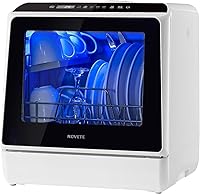
Portable models offer another route when permanent plumbing is not practical. The NOVETE and HAVA countertop models support a built-in 5 L water tank or a faucet connection using an inlet hose; the COMFEE’ model can connect to a faucet with a suitable adapter.
Their dimensions and hookup methods differ, so compare those details with your counter and faucet.
If you are weighing these hookup choices against permanent installation, read portable countertop dishwasher hookup vs built in. For RVs without a suitable cabinet or plumbing route, compare portable dishwashers for RVs.
How do you check the RV’s electrical capacity?
Choose a dishwasher only after confirming its electrical requirements match the RV’s available supply and circuit. Check the appliance label and manual, along with the RV electrical documentation.
The NOVETE and HAVA models list 950 W power use. That figure helps with comparison, but it does not confirm that a specific RV circuit can run the appliance safely with other loads.
Account for what may operate at the same time, such as a microwave, air conditioner or water heater. If you do not know the circuit’s limits or the correct connection method, ask a qualified RV electrician before installation.
Should you choose a built-in or countertop model?
Choose a built-in model if you have a suitable cabinet, permanent hookups and a secure mounting plan. A portable countertop model may suit you better if you want to avoid permanent plumbing or need to move the dishwasher between uses.
| Factor | Built-in installation | Countertop portable |
|---|---|---|
| Space | Uses a dedicated cabinet opening | Uses counter or cupboard space |
| Water | Usually planned into the RV plumbing | Some models use a tank or faucet connection |
| Mounting | Requires a secure installation | Sits on a suitable surface |
| Flexibility | Stays in its installed location | Can be moved when not in use |
| Main check | Fit, connections and travel security | Counter space, hose reach and storage |
These are general setup differences, not guarantees for every model. Confirm each appliance’s installation instructions and the RV’s limits before choosing.
What should you measure before buying?
Write down the opening, route, connection points and nearby clearances before comparing models. A simple measurement list helps you spot conflicts early.
- Measure the cabinet opening at the top, middle and bottom.
- Record width, height and depth, including trim and fixed obstructions.
- Measure the route from the entry door to the planned location.
- Mark the position of water, drain and electrical connections.
- Check room for hoses, wiring, ventilation and access to shutoffs.
- For a countertop model, measure the counter and the space needed to open doors or load dishes.
Keep the measurements with the model’s installation instructions. If the fit is close, confirm the clearances with the manufacturer before ordering.
How loud will a dishwasher feel in a small RV?
Noise depends on the appliance, the installation and how close you are to it. In an RV, a kitchen and sleeping area may be only a few steps apart, so consider when you would run a cycle.
If a manufacturer gives a decibel figure, compare it with the same type of rating from other models. Learn how to read dishwasher decibel ratings before treating a low number as a guarantee of quiet operation in your RV.
A loose mounting point or cabinet panel can also affect the sound you hear. Follow the installation instructions and secure the unit as directed.
How do you choose the right setup?
Choose a built-in dishwasher when the RV has a measured cabinet opening, compatible water and drain connections, enough electrical capacity and a secure mounting plan. Choose a portable countertop model when tank or faucet supply and flexible placement better match your space.
Use the RV dishwasher drawer guide if a drawer layout is on your shortlist, or compare portable RV dishwasher options when you want a setup that does not depend on a permanent cabinet installation.
Frequently asked questions
Can you install a built-in dishwasher in an RV?
You can install one if the cabinet opening, mounting structure, water supply, drain and electrical service match the appliance requirements and the RV can support its weight. Check the RV and dishwasher manuals before cutting cabinetry or changing plumbing.
A compact countertop model may be easier when the RV lacks a suitable permanent space.
What size dishwasher fits an RV?
The right size depends on the usable cabinet opening, clearance for hoses and wiring, and the path through the RV. Measure width, height and depth at several points, then compare them with the appliance’s full dimensions and required clearances.
Capacity matters too, but it cannot compensate for a poor fit.
Can an RV dishwasher use the kitchen faucet?
Some portable countertop dishwashers can connect to a faucet with an inlet hose, while others can also be filled from a built-in water tank. A permanently installed dishwasher may need its own compatible supply connection.
Check the appliance manual and RV plumbing before selecting a hookup method.
What electrical supply does an RV dishwasher need?
Match the dishwasher’s voltage, current and power draw to the RV’s electrical system and available circuit. Check the appliance label and manual, then account for other appliances that may run at the same time.
Ask a qualified RV electrician if the circuit capacity or wiring is unclear.