Portable Countertop Dishwasher Hookup vs Built In
On this page (7 sections)
Choosing between a portable countertop dishwasher and a built-in model depends on your kitchen space and needs. Portable units offer flexibility and don’t require permanent installation, perfect for renters or smaller kitchens. Built-in dishwashers provide a more integrated look and greater capacity but demand dedicated cabinet space and plumbing.
Many shoppers wonder about the hookup differences. While both connect to a water supply and drain, portable models use your faucet for water and drain into the sink. Built-in units connect directly to your home’s plumbing, offering a more permanent and convenient solution once installed. We found understanding these core distinctions is key to making the right choice.
- Portable dishwashers hook up to your faucet.
- Built-in dishwashers connect to your home’s plumbing.
- Portables are great for renters or small kitchens.
- Built-ins offer a more integrated and larger capacity solution.
- Consider your space and installation options carefully.
Let’s break down how each type connects and what that means for your kitchen setup.
“`htmlUnderstanding Dishwasher Hookup Differences: Portable vs. Built-In
You’re probably wondering how these dishwashers actually connect to your kitchen’s water and drainage. It’s a fair question, and the answer is the biggest difference between the two types. Let’s break it down so you can see what works best for your home.
Portable Countertop Dishwasher Hookup: The Faucet Connection
A portable countertop dishwasher is designed for simplicity and flexibility. Its hookup process is straightforward. You don’t need any permanent plumbing changes. This makes it a popular choice for many households.
How It Gets Water
The magic happens at your kitchen faucet. The dishwasher comes with a special adapter. You unscrew your faucet aerator and screw on this adapter. Then, you simply connect the dishwasher’s hose to it. When you want to run the dishwasher, you turn on your hot water tap. This supplies the water needed for the wash cycle. We found this connection is usually secure and easy to manage.
How It Drains
Draining is just as simple. The dishwasher has a drain hose. You place the end of this hose into your sink. It needs to hang securely, usually with a special bracket that comes with the unit. When the dishwasher needs to drain dirty water, it pumps it directly into your sink. Make sure your sink drain isn’t clogged! Research indicates that most sink drains can handle the outflow without issue.
Pros of the Faucet Hookup
- No permanent installation needed: Perfect for renters or if you don’t want to alter your kitchen.
- Easy to connect and disconnect: You can hook it up only when you need it.
- Portable: You can move it out of the way when not in use.
- Quick setup: Many users report being able to set it up in minutes.
Cons of the Faucet Hookup
- Uses your faucet: You can’t use your sink for washing dishes while the dishwasher is running.
- Limited capacity: They are typically smaller than built-in models.
- Appearance: The hose and connection can be visible, which some find less appealing.
- Potential for leaks: If not connected properly, there’s a small risk of water leaks.
Built-In Dishwasher Hookup: The Plumbing Connection
A built-in dishwasher is a more permanent fixture in your kitchen. It integrates directly into your cabinetry. This means its hookup involves your home’s existing plumbing system.
How It Gets Water
Built-in dishwashers connect to your home’s hot water supply line. This is usually a dedicated valve under your sink. A water supply hose runs from this valve to the dishwasher. This connection is permanent once installed. Many plumbing codes require a specific type of valve for this connection (Plumbing & Drainage Institute).
How It Drains
The drain hose for a built-in unit also connects to your plumbing. It typically connects to your sink’s drain pipe. This connection is made using a special fitting. Often, a high loop is required for the drain hose. This prevents dirty sink water from backing up into the dishwasher. Experts in home plumbing recommend this loop to prevent contamination.
Electrical Connection
In addition to water and drainage, built-in dishwashers require an electrical connection. This is usually hardwired into your home’s electrical system. It needs its own circuit or be on a circuit with limited other high-power appliances. Safety regulations for electrical connections are strict (National Electrical Code).
Pros of the Plumbing Hookup
- Permanent and clean look: It’s integrated into your kitchen design.
- Higher capacity: Generally holds more dishes than portable models.
- Convenience: Just load, add detergent, and start. No faucet tying up.
- Dedicated water supply: Consistent water pressure and temperature.
Cons of the Plumbing Hookup
- Requires permanent installation: Not ideal for renters or if you move often.
- More complex setup: May require professional plumbing and electrical work.
- Takes up cabinet space: A dedicated spot in your kitchen is needed.
- Repair can be more involved: Accessing internal components might require removing the unit.
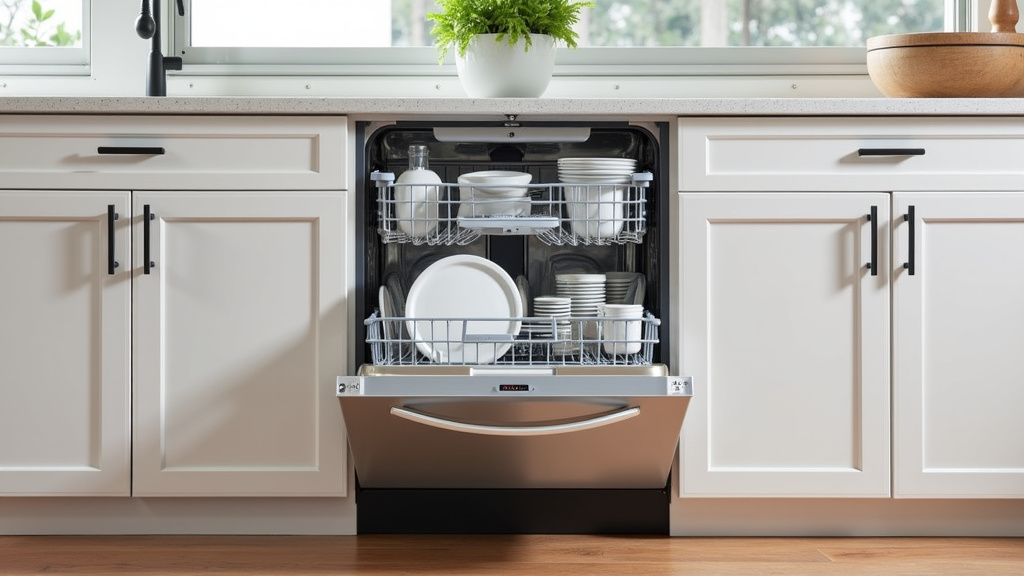
Key Differences in a Nutshell
The fundamental difference lies in how they source water and manage drainage. One uses your faucet as a temporary tap, while the other integrates directly into your home’s water and waste lines.
| Feature | Portable Countertop Dishwasher | Built-In Dishwasher |
|---|---|---|
| Water Source | Kitchen faucet adapter | Dedicated hot water line |
| Drainage | Into the sink | Connected to sink drain pipe |
| Installation | Temporary, no permanent changes | Permanent, requires plumbing/electrical work |
| Portability | High | None |
| Capacity | Lower | Higher |
| Aesthetics | Visible hose connection | Integrated, hidden components |
Making the Right Choice for Your Kitchen
Your decision really comes down to your living situation and kitchen setup. Think about how much space you have. Consider if you can make permanent changes to your plumbing. Do you rent your home? If so, a portable model is likely your only option. If you own your home and have the space, a built-in unit offers more long-term convenience.
Checklist: Which Hookup is Right for You?
- Do you rent your home? (Portable is best)
- Do you have limited counter space? (Portable might fit)
- Do you want a seamless kitchen look? (Built-in is better)
- Are you comfortable with basic plumbing connections? (Portable is easier)
- Do you need the largest possible dishwashing capacity? (Built-in is ideal)
- Are you prepared for potential installation costs for a built-in? (Consider this for built-in)
We found that understanding these hookup details helps you visualize how each dishwasher will fit into your daily routine. It’s not just about cleaning dishes; it’s about how the appliance works with your existing kitchen infrastructure. This is a big step in ensuring you’ll be happy with your purchase long after it’s installed.
“`Conclusion
You’ve seen the key differences between portable countertop and built-in dishwashers, especially how they connect. A portable dishwasher uses your faucet and drains into your sink, offering easy setup and flexibility for renters or small kitchens. A built-in dishwasher connects directly to your home’s plumbing for a permanent, integrated look and greater capacity. Your choice depends on your living situation, available space, and desire for permanent kitchen modifications. Take a moment to review your kitchen and your needs – this will guide you to the appliance that best fits your daily routine.
Frequently Asked Questions
Can I use my kitchen sink if my portable dishwasher is connected?
No, you cannot typically use your kitchen sink while a portable countertop dishwasher is actively running. The dishwasher uses the faucet connection for its water supply and drains into the sink, meaning both are occupied. You’ll need to wait until the cycle is complete and the dishwasher is disconnected before using the sink normally.
Do I need a plumber to install a portable dishwasher?
Generally, no. Portable countertop dishwashers are designed for user-friendly setup. You just need to attach the adapter to your faucet and place the drain hose in the sink. If you’re not comfortable with basic faucet attachments, you might want to get help, but it’s not typically a job for a professional plumber.
Will a portable dishwasher fit any faucet?
Most portable dishwashers come with universal adapters, but it’s wise to check. Some very old or uniquely shaped faucets might not be compatible. Always confirm the adapter type and your faucet’s aerator thread size before purchasing to ensure a proper fit.
What happens if my sink drain is clogged when the portable dishwasher drains?
If your sink drain is clogged, the dirty water from the dishwasher won’t be able to drain properly. This could cause water to back up into the dishwasher or even overflow into your sink. It’s important to ensure your sink drains freely before running a portable dishwasher.
Can a built-in dishwasher be removed if I move?
While a built-in dishwasher is a permanent installation, it can be removed if you move. However, this process is more involved than disconnecting a portable unit. It requires disconnecting the plumbing and electrical connections, and you’ll be left with an empty cabinet space to fill or repair.


