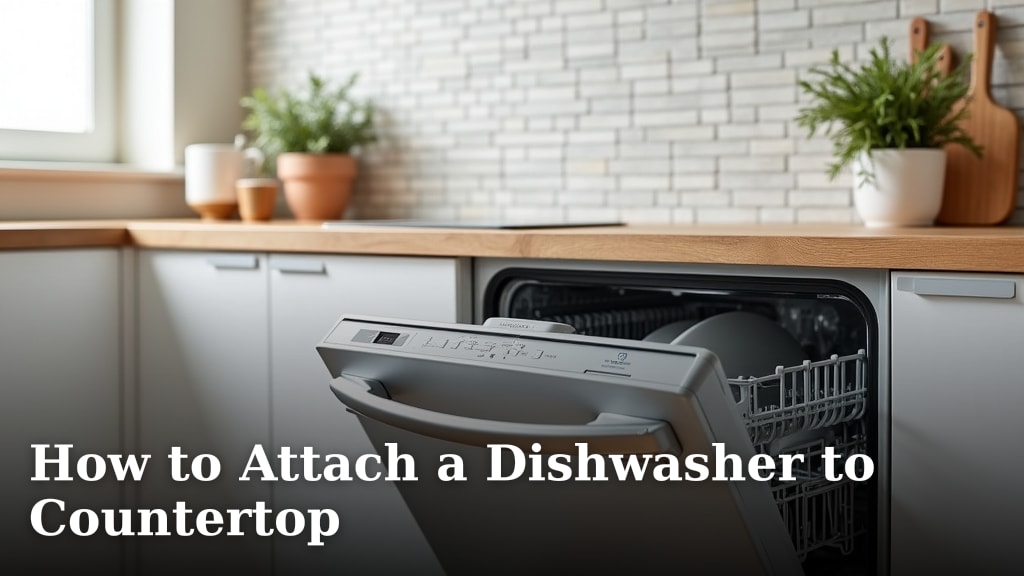
Can You Put a Portable Dishwasher in a Cabinet?
Usually, you should not enclose a portable dishwasher in a cabinet. It needs the clearances and access its manual specifies, plus a safe way to connect water, drain, and power.
On this page (7 sections)
- Can you put a portable dishwasher in a cabinet?
- What should you check before enclosing the dishwasher?
- What can go wrong if the opening is too tight?
- Do countertop mounting brackets make a portable dishwasher built in?
- How do you plan cabinet space for a dishwasher?
- What should you do if the dishwasher is already in a cabinet?
- Is cabinet placement right for your portable dishwasher?
Usually, you should not enclose a portable dishwasher in a cabinet. It needs the clearances and access its manual specifies, plus a safe route for water, drainage, and power.
Some owners consider cabinet placement to save floor space. Before changing cabinetry, confirm that your exact model is designed for that location; a portable unit's finished sides, wheels, controls, or faucet connection may need to remain accessible.
Can you put a portable dishwasher in a cabinet?
Only if the manufacturer allows it and the cabinet meets the model's installation requirements. A space that fits the dishwasher's outer dimensions may still block ventilation, hoses, controls, or service access.
Measure the opening's width, height, and depth, then compare those numbers with the manual's required clearances. Leave room for the door to open fully and for dishes and racks to move without hitting nearby cabinet fronts.
A portable dishwasher may be designed to roll near the sink and connect to a faucet when needed. That setup can conflict with a cabinet that prevents the machine from moving or hides its water and drain connections.
For a built-in-style installation, compare the model's instructions with the differences explained in whether a portable dishwasher can be built in. Don't assume a mounting bracket or a snug opening makes a portable appliance suitable for permanent enclosure.
What should you check before enclosing the dishwasher?
Check ventilation, connections, access, and the exact installation instructions before building around the appliance. If any requirement is unclear, ask the manufacturer about the model number rather than relying on a generic cabinet plan.
How much clearance and ventilation does it need?
Use the clearances in your dishwasher's manual. Don't cover vents, block openings, or add panels that could trap heat or moisture around the appliance.
The amount and location of required space vary by model. Keep any manufacturer-specified gap around the sides, back, top, and door, and make sure the appliance can release heat as intended.
Don't guess based on another dishwasher's measurements. A cabinet installer can help plan an opening, but the appliance instructions determine whether enclosure is acceptable.
Can the hoses, faucet connection, and power cord reach safely?
The water supply, drain hose, and power cord must follow the manufacturer's routing instructions without being pinched or stretched. A cabinet should not compress a hose when the machine is pushed into place or block access to a shutoff or plug.
Many portable units use a faucet connection and a drain hose that empties into the sink. If yours does, make sure the intended hookup can still be reached and used as described in the manual.
Don't extend hoses or change electrical connections unless the manufacturer permits it. For step-by-step hookup guidance, see how to hook up a portable countertop dishwasher.
Can you still load, move, and service it?
Keep the door, controls, filters, and any removable parts accessible. A cabinet that leaves no room to open the door or pull out a rack can make daily use awkward and routine care difficult.
If the model has wheels, check whether the manual expects you to roll it for setup or storage. A fixed cabinet could also make it harder to inspect a leak or move the unit for service.
Plan around the appliance's actual footprint, including the open door and any connections. If you need a compact appliance that stays in one place, compare it with a model designed for built-in installation.
What can go wrong if the opening is too tight?
A tight or improvised enclosure can block airflow, pinch hoses, restrict access, or leave too little room to use the door. Those problems can make installation unsafe or prevent the dishwasher from operating as intended.
A hose caught behind the cabinet may kink or strain its connection. A power cord pressed against an edge can also be damaged, so keep both routes clear and follow the manual.
Don't remove the top, wheels, or other parts to make a portable dishwasher fit unless the manufacturer approves that change. If the appliance won't fit with the required clearances, choose another location or a model intended for that space.
Do countertop mounting brackets make a portable dishwasher built in?
No. A countertop mounting bracket secures a compatible dishwasher at the counter; it doesn't make a portable model suitable for cabinet enclosure.
Check the appliance instructions and bracket fit before buying hardware.
The EZVENTURES bracket is described for securing compatible dishwashers under countertops, including solid-surface counters. It may suit a separate installation problem involving a compatible built-in unit.
The IWIWE bracket is described for most slim 18-inch dishwashers and specifically does not fit standard 24-inch models. Check your dishwasher's size and mounting instructions before considering it.
Kelaro describes its bracket for common 24-inch dishwashers and says it isn't compatible with thin 18-inch models. Confirm the appliance type and dimensions before choosing hardware.
A bracket addresses anchoring, not ventilation, hose routing, or the space needed to use and service the dishwasher. If you're planning a fixed installation, see how to attach a dishwasher to a countertop and confirm that your appliance is designed for it.
How do you plan cabinet space for a dishwasher?
Measure the machine and its working space, then compare each measurement with the manual. Include the door's open position, the route for hoses and cord, and the room needed to reach controls and service parts.
Dishwasher dimensions aren't all the same. Check whether there is a standard dishwasher size before comparing an opening with a built-in model's measurements.
If you are adapting a counter area, also consider how the portable unit will connect to water and drain. A portable countertop dishwasher setup guide can help you plan the appliance's position and connections.
What should you do if the dishwasher is already in a cabinet?
Stop using an enclosure that blocks a required vent, pinches a hose, or prevents safe access until you check the manual. If the machine needs to be moved, turn it off and disconnect it as instructed.
Don't pull a connected unit by its cord or hoses. Follow the model's steps for disconnecting water and drainage, and ask a qualified installer for help if access is tight or a connection is stuck.
If you need to remove an appliance fitted under a counter, read how to remove a dishwasher from under a counter. That guide concerns removal steps; your portable dishwasher's own instructions still take priority.
Is cabinet placement right for your portable dishwasher?
Choose cabinet placement only when the manufacturer permits it and you can preserve clearances, ventilation, connections, and access. If the manual expects the unit to roll to a sink or connect at a faucet, keep that setup usable.
For a fixed cabinet installation, pick a dishwasher designed for built-in placement and measure the opening against its instructions. For a portable model, use a location that leaves it room to connect, operate, and move as intended.
Frequently asked questions
Can you put a portable dishwasher under a counter?
Sometimes, but only if the manufacturer permits that setup and the space meets the appliance's clearance, ventilation, leveling, and connection needs. A portable model may have a finished top, wheels, or a faucet hookup that makes a fixed cabinet location impractical.
Check the manual and measure before changing cabinets.
Does a portable dishwasher need ventilation?
Follow the manual's clearance and ventilation instructions, and don't block vents or openings. Heat and moisture need to escape as the appliance operates and dries dishes.
If the manual doesn't clearly allow an enclosed installation, contact the manufacturer before building a cabinet around the machine.
Can you leave a portable dishwasher connected to the sink?
Some portable dishwashers connect to a kitchen faucet for water and discharge through a drain hose, but connection details vary by model. Follow the manual for the approved adapter, hose routing, and operating position.
Don't leave a temporary faucet connection under pressure unless the manufacturer says that is allowed.
Can a portable dishwasher be built in permanently?
A portable dishwasher generally isn't a built-in model, and cabinet placement doesn't change its installation requirements. A permanent setup may block access to its controls, wheels, hoses, or faucet connector.
Check the model's manual and ask the manufacturer before removing parts or altering the cabinet.