How to Clean a Dishwasher with Vinegar
Use vinegar only if your dishwasher manual allows it. For an approved cleaning cycle, place a dishwasher-safe cup of white vinegar upright on the upper rack, run an empty cycle, then clean removable parts separately.
On this page (8 sections)
- How do you clean a dishwasher with vinegar?
- Why should you check the manual before using vinegar?
- Should you clean the filter before running vinegar?
- How do you clean spray arms and other areas by hand?
- Can vinegar clean a countertop dishwasher?
- When should you replace a dishwasher filter instead?
- What should you avoid when cleaning with vinegar?
- What is the safest way to decide whether to use vinegar?
Use vinegar to clean a dishwasher only if its manual permits acidic cleaners. If allowed, place a dishwasher-safe cup of white vinegar upright on the upper rack and run an empty cycle; clean the filter and spray arms by hand.
Vinegar may help with some odors and light mineral film, but it isn't a universal dishwasher cleaner. The appliance's care instructions take priority because some makers warn that vinegar can harm certain parts or finishes.
How do you clean a dishwasher with vinegar?
Check the manual first, then run an empty cycle with vinegar in an upright cup if approved. Keep vinegar away from the detergent dispenser and rubber parts unless the manual specifically directs otherwise.
- Remove dishes and check the manual's cleaning instructions.
- Take out food scraps and clean the filter as directed.
- Pour white vinegar into a dishwasher-safe cup.
- Set the cup upright on the upper rack.
- Run an empty cycle using the setting the manual recommends.
- Wipe the door edges and gasket with a damp cloth, then dry them.
Don't add detergent to the vinegar cycle. Never combine vinegar with bleach, bleach-based cleaners, or other cleaning products.
For the full routine, see our guide to how to clean a dishwasher. A vinegar cycle is only one possible part of that care.
Why should you check the manual before using vinegar?
The manual tells you whether vinegar is safe for your specific dishwasher. Some manufacturers caution against acidic cleaners because they may damage rubber seals, metal parts, or interior finishes over time.
Look for a cleaning or maintenance section. If it says to avoid vinegar, follow its recommended dishwasher cleaner or cleaning cycle instead.
Don't assume that a method is safe because it worked in another dishwasher. Models can use different materials and care instructions.
Should you clean the filter before running vinegar?
Yes, remove food and clean the filter before using a cleaning cycle. Vinegar won't remove trapped scraps or replace the filter's job of catching debris.
Follow your manual to remove and rinse the filter. Avoid sharp tools and harsh scrubbing that could damage its mesh or locking parts.
For step-by-step help, read how to clean a dishwasher filter. Whirlpool owners can also use our instructions for how to clean a dishwasher filter on a Whirlpool.
If a filter is cracked or no longer fits correctly, a compatible replacement may be needed. Confirm the appliance model and part number before ordering.
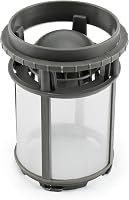
This eHuangTools drain mesh replaces specified part numbers including 00645038 and 00651097, and is described for some dishwasher models. Compatibility varies, so check your model against the maker's compatibility information before buying.
How do you clean spray arms and other areas by hand?
Clean spray arms only as your manual directs, and remove visible debris without forcing the openings. Vinegar in a wash cycle may not clear food lodged in the spray holes.
Take out the spray arms only if the manual explains how. Rinse them and clear blocked holes with a soft brush or another approved method.
Use our guide to clean dishwasher spray arms for more detail. Wipe the door edges and gasket with a damp cloth, then dry them.
Don't pour vinegar over seals or leave it sitting on a surface. Avoid abrasive pads and sharp picks that could scratch the interior or widen spray openings.
Can vinegar clean a countertop dishwasher?
Use vinegar in a countertop dishwasher only when its manual allows it. Some models use a water tank or drain hose setup that calls for a specific cleaning method.
Follow the maker's directions for emptying, cleaning, and draining the machine. For help with one part, see how to clean a countertop dishwasher drain hose.
A countertop dishwasher circulates and drains water differently from some full-size models. Our guide explains how a mini countertop dishwasher works, including its water flow.
When should you replace a dishwasher filter instead?
Replace a filter only when it is damaged, missing, or unsuitable for the model. Vinegar may help with residue, but it cannot repair a broken filter or correct a poor fit.
The Cenipar W10872845 pump filter cup is described as washable and compatible with some Whirlpool and Kenmore dishwashers. Confirm the model and replacement number before choosing it.
The AMI PARTS W10872845 cup is another replacement option for specified Whirlpool, Kenmore, Amana, and KitchenAid models. Check the existing part's shape and model compatibility before ordering.
Don't replace a filter just because the dishwasher smells or leaves residue. Clean the parts first, then consult the manual or a qualified repair service if drainage or cleaning problems continue.
What should you avoid when cleaning with vinegar?
Never mix vinegar with bleach, and don't use vinegar if the manual prohibits it. Also avoid pouring it into the dispenser or onto seals unless the instructions specifically say to.
Keep cleaning products separate. Mixing vinegar and bleach can release dangerous chlorine gas.
Don't use a vinegar cycle as a fix for standing water, leaks, unusual noises, or persistent error codes. Those symptoms may have causes that a cleaning cycle won't address.
Don't pour chemical drain cleaner into a dishwasher unless its manual specifically allows it.
What is the safest way to decide whether to use vinegar?
Use vinegar only when the manual approves it; otherwise, choose the manufacturer’s recommended cleaning method. Clean the filter and spray arms separately, and replace a part only after checking model compatibility.
For a vinegar-friendly model, use a dishwasher-safe cup on the upper rack and an empty cycle. For a model that cautions against acids, follow its care instructions instead.
If the dishwasher still drains poorly after routine cleaning, check the filter and drain path, then seek model-specific repair guidance. A cleaning cycle can't substitute for a working filter or a clear drain.
Frequently asked questions
Can you clean a dishwasher with vinegar?
Sometimes. Use white vinegar only if your dishwasher manual permits it, since some manufacturers warn against vinegar or acidic cleaners on certain parts.
If allowed, place a dishwasher-safe cup upright on the upper rack and run an empty cycle.
Never pour vinegar into the detergent dispenser unless the manual says to.
Where do you put vinegar in a dishwasher to clean it?
If the manual approves vinegar, pour it into a dishwasher-safe cup and set the cup upright on the upper rack of an empty dishwasher. This lets the vinegar disperse during the wash.
Don't pour it over the door seal, into the detergent compartment, or directly onto metal parts unless the manual gives those directions.
How often should you clean a dishwasher with vinegar?
There is no single schedule that fits every dishwasher. Follow the care interval in your manual and use vinegar only if the manufacturer allows it.
Between deep cleans, remove food from the filter and wipe the door edges as needed, since those steps don't require running an acid wash.
Can you mix vinegar and bleach in a dishwasher?
No. Never mix vinegar with bleach or a cleaner containing bleach, because the combination can release dangerous chlorine gas.
Don't put both products in the dishwasher during the same cleaning routine.
Use only a cleaning method and products approved by the dishwasher manufacturer.