How to Remove a Dishwasher Spray Arm
To remove a dishwasher spray arm, identify its fastener first: many lower arms twist off or lift away, while some models use a cap, nut, or screw. Check your manual, then release the correct fastener without forcing the arm.
On this page (9 sections)
- How do you remove a dishwasher spray arm safely?
- How can you identify the spray arm fastener?
- What steps remove a twist-lock spray arm?
- How do you remove a spray arm with a cap, nut, or screw?
- What should you check while the spray arm is off?
- How do you reinstall the spray arm?
- What should you do if the spray arm won't come off?
- Which replacement parts may help with dishwasher care?
- How do you decide whether to clean or replace the spray arm?
To remove a dishwasher spray arm, identify its fastener first: many lower arms twist off or lift away, while some models use a cap, nut, or screw. Check your manual, then release the correct fastener without forcing the arm.
Dishwasher designs vary, so there isn't one safe removal method for every model. Turn the machine off, pull out the rack if needed, and look at the arm's center before you touch it.
How do you remove a dishwasher spray arm safely?
Find out whether the arm twists, lifts, or has a separate fastener before trying to remove it. Your dishwasher manual is the best guide for the model-specific method.
Open the door and let any hot parts cool. Remove dishes and the rack that blocks access, then inspect the hub where the spray arm meets the support.
Look for a cap, locking tab, nut, or screw. Don't assume that a familiar-looking arm uses the same attachment as another dishwasher.
If you aren't sure which part to turn, check the manual or the manufacturer's support information using your model number. For a broader cleaning sequence, see how to clean a dishwasher.
How can you identify the spray arm fastener?
The hub at the center of the spray arm shows what holds it in place. Check the shape and markings before turning or lifting anything.
A twist-lock arm may have a marked direction or a hub that turns by hand. A cap or nut may sit over the hub, while a screw can be visible at the center.
Some arms are designed to lift off their support without turning. If the arm resists, don't use pliers or a screwdriver to pry it loose; a plastic hub or locking tab can break.
Take a clear photo before removal if you want a reference for putting the arm back in the same position. Keep any small cap, screw, or washer in a safe place.
Should you remove the lower or upper spray arm?
Remove only the arm you need to clean or inspect, and check how its rack or support releases. The lower arm is usually reached from the tub floor, while an upper arm may be attached to the rack or a water-feed tube.
Pull the rack out enough to see the upper arm's connection. If the connection is part of the rack or feed tube, follow the manual rather than pulling on the arm itself.
Don't bend the support to create extra clearance. If the rack has to come out first, use the instructions for your model.
What steps remove a twist-lock spray arm?
Turn a twist-lock arm only in the direction shown by the manual or hub markings. Hold the base steady, rotate the arm gently, and lift it away once the lock releases.
- Switch off the dishwasher and let the interior cool.
- Remove the rack that blocks access, if needed.
- Hold the arm near its hub and locate the lock.
- Turn the arm or cap as directed, using light hand pressure.
- Lift the arm straight off after it releases.
Stop if the arm doesn't turn with light pressure. Recheck the manual and look for a hidden cap or screw before trying again.
How do you remove a spray arm with a cap, nut, or screw?
Release the identified fastener with the method and tool specified for your dishwasher. Keep the fastener stable, and avoid using extra force if it won't move.
Remove a cap or nut only if the manual says it is removable. For a screw, use the correct driver and keep it aligned with the screw head to reduce the chance of stripping it.
Set small parts aside in the order they came off. If a screw or cap is damaged, or the arm still won't release, stop and contact the manufacturer or a qualified appliance technician.
What should you check while the spray arm is off?
Check the arm's holes, hub, and support for visible debris or damage. Remove loose food particles and follow the manual's cleaning directions.
Rinse the arm if the manual allows it, and clear blocked holes with a soft brush. Avoid sharp tools that could enlarge or damage the openings.
For a full cleaning routine, use our guide to how to clean dishwasher spray arms. If mineral buildup is part of the problem, see how to clean a dishwasher with vinegar, and follow your manual before adding any cleaner.
Could a clogged filter be the real problem?
A dirty filter can affect drainage and cleaning, so check it if spray-arm cleaning doesn't solve the issue. The filter and spray arm are separate parts with different removal steps.
Use the manual to remove the filter and note how it locks into place. Our walkthrough on how to remove a dishwasher filter covers that task.
Confirm your exact dishwasher model and part number before choosing a replacement. A filter that looks similar may not fit your appliance.
How do you reinstall the spray arm?
Line up the arm with its support and secure the same fastener you removed. It should sit firmly without wobbling or rubbing against the rack.
For a twist-lock design, align the hub and turn it until it locks as the manual describes. Refit any cap, nut, screw, or washer in its original position.
Spin the arm by hand to check that it moves freely. Slide the rack in and out slowly to make sure the arm clears dishes and rack parts.
What should you do if the spray arm won't come off?
Stop and recheck the model-specific instructions instead of forcing the arm. A hidden retainer, a different release direction, or a rack-mounted design may explain why it won't move.
Check the manual's diagram and confirm you're holding the fastener, not the support. Don't use heat, penetrating oil, or leverage unless the manufacturer specifically directs it.
If the plastic is cracked or a locking tab has broken, replace the damaged part with one that matches your model. A technician can help if the arm is stuck or its support is damaged.
Which replacement parts may help with dishwasher care?
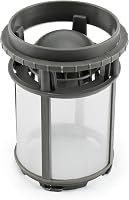
Choose a replacement only when you have identified the faulty part and confirmed compatibility with your dishwasher model. The products below are filter parts, not spray arms.
Cenipar describes this filter cup as a press-and-twist replacement with a fine-mesh screen. Check the part number and your model before buying.
This filter cup uses a locking fit, so confirm the shape and locking-tab orientation match your current part. Don't buy it as a spray-arm replacement.
How do you decide whether to clean or replace the spray arm?
Clean the arm when it is intact and has removable debris; replace it only if it's damaged or your manual calls for replacement. Check the hub and openings for cracks, broken tabs, or other visible wear.
Use the manual to identify the correct replacement part for your model. If the arm fits properly and turns freely after reinstallation, you can run a cycle according to the manufacturer's instructions.
For the safest removal, follow this rule: twist or lift only when your model's instructions confirm that method, and stop when the fastener is unclear or stuck. Use the spray-arm cleaning guide if the arm is intact but needs attention.
Frequently asked questions
Do all dishwasher spray arms twist off?
No. Some spray arms twist off, while others lift away or use a cap, nut, or screw.
Check the manual for your model and inspect the center of the arm before turning or pulling.
If the fastener does not release with light pressure, stop and confirm the removal method.
Do I need to turn off power before removing a spray arm?
Turn the dishwasher off before you work inside it, and follow the manual's safety instructions. If you need to reach electrical parts or remove panels, switch off power at the breaker first.
Keep tools and hands away from wiring, and don't work on a machine that is running.
Can I run the dishwasher without the spray arm?
Don't run a wash cycle with a spray arm removed unless the manual specifically allows it. The arm directs water through the tub, and running without it may leave dishes unwashed or cause water to spray where it shouldn't.
Reinstall and secure the arm before starting a cycle.