Delta Kitchen Faucet Cartridge Replacement Guide
The correct Delta kitchen faucet cartridge replacement must match your faucet body and valve design. Identify the faucet model first, then compare the handle style, cartridge shape, stem and retaining method before removing the old part.
On this page (10 sections)
- Delta Kitchen Faucet Cartridge Replacement Guide
- How do you identify a Delta kitchen faucet cartridge?
- Which cartridge details need to match?
- Can a Delta cartridge problem look like another faucet problem?
- What should you do before removing the old cartridge?
- Which repair products can help with related faucet problems?
- How do you install a Delta kitchen faucet replacement cartridge?
- Should you replace the gasket at the same time?
- What is the safest way to choose a Delta cartridge?
- Final decision rule for Delta kitchen faucet cartridge replacement
Delta Kitchen Faucet Cartridge Replacement Guide
The right Delta kitchen faucet cartridge replacement is the one made for your faucet body and valve design, not simply the one that looks similar. Find the model information, confirm the internal valve style and compare the old cartridge before you order.
That approach saves time because two faucets can share a name and still use different internal parts. The model number, valve housing and cartridge shape are more useful clues than the finish or the general look of the spout.
A cartridge controls how the faucet opens, closes and blends hot and cold water. A worn cartridge can cause dripping, a stiff handle, uneven temperature control or water that continues after the handle is closed.
Those symptoms can be easy to confuse with other faults. A loose handle may point to the handle fixing rather than the cartridge, while a weak spray may point to the spray head or a blocked filter.
This guide explains how to identify the correct cartridge and how to separate a cartridge problem from a handle, gasket, filter or diverter problem. For broader buying advice, see our kitchen faucet guide.
The aim is to match the repair to the part that has actually failed. That keeps the job focused and avoids ordering parts that will not fix the symptom you are seeing at the sink.
How do you identify a Delta kitchen faucet cartridge?
Identify the faucet model first, then verify the cartridge against the faucet body and valve design. The model number is more reliable than the faucet finish, handle shape or general appearance.
Check these areas before removing anything:
- Look beneath the sink for a label, model number or installation information.
- Check the faucet base, escutcheon or supply area for identifying marks.
- Note whether the faucet has one handle or separate hot and cold handles.
- Record whether the handle moves up and down, side to side or in a circular path.
- Photograph the handle, cap, retaining nut and cartridge before disassembly.
- Keep the old cartridge until the replacement has been compared.
The model number helps narrow the part, but it is still wise to compare the physical cartridge. Small differences in the stem, seals, tabs and retaining arrangement can prevent a part from fitting correctly.
If you need several repair components, our guide to the best Delta kitchen faucet replacement parts can help you separate cartridge repairs from other faucet fixes.
Which cartridge details need to match?
The cartridge must match the valve housing, stem, seals and retaining method inside your faucet. A cartridge that fits into the opening but does not match the valve design may leak, bind or fail to control temperature correctly.
Compare the following details:
Faucet body and valve design
The faucet body holds the valve housing, so the replacement cartridge must be designed for that internal structure. The same brand does not mean every cartridge fits every faucet.
A pull-down spout, spray head or finish does not identify the cartridge by itself. Focus on the valve area beneath the handle and the model information connected to that faucet body.
Handle arrangement
Single-handle faucets usually blend hot and cold water through one cartridge or valve assembly. Two-handle faucets use separate controls, so their internal parts follow a different arrangement.
The handle movement also matters. A handle that lifts, rotates or moves across an arc can point to different valve designs, but movement alone is not enough to confirm a replacement.
Stem and cartridge shape
Compare the stem length, stem shape, alignment tabs and overall cartridge profile. Take a clear photo from several angles before discarding the old part.
Do not force a cartridge because the opening appears close in size. A tight fit can damage the housing or make later removal harder.
Retaining parts and seals
Some faucet designs use a retaining nut, clip, cap or other hardware to hold the cartridge in place. The replacement must sit correctly under those parts.
Inspect the seals around the cartridge and valve housing. A damaged seal can cause a leak even when the cartridge itself is correct.
Can a Delta cartridge problem look like another faucet problem?
Yes. A dripping faucet can need a cartridge, seal or valve repair, while poor spray performance may come from the spray head, filter or diverter.
Match the repair to the symptom before buying a cartridge.
Use this quick guide:
| Symptom | Possible area to inspect |
|---|---|
| Water drips after the handle is closed | Cartridge, seal or valve seating |
| Handle feels stiff or rough | Cartridge, stem or retaining parts |
| Handle is loose but water control works | Handle, screw or stem connection |
| Spray pattern is weak or uneven | Spray head, aerator or filter |
| Water does not switch between outlets | Diverter or internal routing |
| Leak appears around the handle | Cartridge seal, cap or valve housing |
| Hot and cold control is inconsistent | Cartridge or valve design |
A cartridge cannot repair every faucet problem. It works inside the valve area, so it mainly helps when the fault affects opening, closing or hot and cold blending.
If the issue concerns filtered water, read our guide to Delta kitchen faucet filter replacement. A blocked or worn filter can change taste, flow or pressure without anything being wrong with the cartridge.
For a faucet that will not switch correctly between spray paths, see Delta kitchen faucet diverter. That kind of fault usually sits in the routing between outlets rather than in the cartridge itself.
It is worth checking the symptom against the likely location before you buy. Water that drips from the spout after the handle is closed points more toward the valve area than a spray head fault does.
A weak or uneven spray usually starts with the spray head, aerator or filter. A leak around the handle can involve the cartridge seal, cap or retaining parts, so the exact leak path matters.
Keeping those areas separate makes the repair easier to plan. You can then choose one part for one clear fault instead of replacing several items and hoping one of them helps.
What should you do before removing the old cartridge?
Shut off both water supplies and open the faucet to release pressure. Place a towel over the drain so small screws, clips and seals cannot fall into the sink or disposal area.
Take photos in this order:
- The complete faucet and handle position.
- The handle connection and decorative cap.
- The retaining nut, clip or collar.
- The cartridge orientation inside the valve housing.
- The removed cartridge from several angles.
Those photos are more than a record for later. They show the handle position before removal, the order in which parts came off and how the cartridge sat in the housing.
Keep the parts together in a small container. A mug or parts tray works well, and it helps to lay them out in removal order so you can refit them in reverse.
If the faucet uses a retaining clip, do not turn on the water while it is removed. Without that clip the cartridge may not stay seated, and water pressure can push it out of place.
Clean mineral buildup gently from the exposed valve area. A soft cloth and careful wiping are enough, and you should avoid harsh scraping on the sealing surfaces.
Avoid scratching the sealing surfaces, because damage there can cause a leak even with a new cartridge. The new part can only seal properly if the housing surface is clean and left intact.
Check the old cartridge while it is out of the faucet. Note the stem shape, seals, tabs and overall length, then compare each detail with the replacement before fitting it.
Work slowly at each stage and keep the sink area clear. That makes it easier to spot small parts, notice damage and refit the handle and retaining hardware in the right order.
Which repair products can help with related faucet problems?
These products address nearby repair needs, but they are not Delta cartridges. Use them only when the faucet symptom matches the part and the connection details are confirmed.
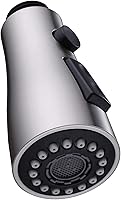
The J-HVA head offers stream, spray and blade spray modes. Its silicone nozzles and ABS construction suit a worn or blocked pull-down sprayer head, but the 15 connectors do not guarantee compatibility with every Delta faucet.
This J-HVA option is useful when the spray head is the problem rather than the cartridge. It has stream, spray and blade spray modes, with ABS construction and silicone nozzles, but you still need to confirm the connection.
This handle suits a faucet with a 35mm cartridge and matching 9x9mm square stem. It is made from zinc alloy and has a screw-on attachment, so it can address a damaged handle without replacing the cartridge.
How do you install a Delta kitchen faucet replacement cartridge?
Install the replacement by matching its orientation to the old cartridge, seating it fully in the valve housing and reinstalling the retaining hardware. The cartridge must sit flat and align with the faucet body before you restore water pressure.
A careful process looks like this:
- Shut off the hot and cold supply valves.
- Open the faucet to release remaining pressure.
- Remove the handle and decorative cover.
- Remove the retaining nut, clip or collar.
- Pull the old cartridge straight out where possible.
- Compare the old and replacement cartridges.
- Clean the valve housing without scratching the sealing surfaces.
- Align the new cartridge with the faucet body.
- Reinstall the retaining parts and handle.
- Open the supply valves slowly.
- Check around the handle and base for leaks.
- Test hot, cold, stream and spray functions as applicable.
Do not overtighten the retaining hardware. Excess force can damage threads, deform seals or make the handle difficult to operate.
If the faucet still leaks after installation, shut off the water and recheck the cartridge orientation, seals and retaining parts. A damaged valve housing may need more than a cartridge replacement.
Should you replace the gasket at the same time?
Replace a gasket when it is cracked, flattened, torn or no longer seals correctly. A cartridge replacement will not correct a separate gasket problem.
Gaskets do quiet work, so they are often overlooked during a cartridge repair. When they lose their shape or elasticity, water can pass where it should be held back.
Inspect the gasket area while the handle and cartridge are removed. Look for cracks, hard edges, flattened sections and any sign that the surface no longer presses evenly.
Keep the old gasket until the correct replacement has been identified. Holding the old part next to a new one lets you compare material, thickness and shape before anything is fitted.
Clean the sealing surface before installation. Any grit or leftover buildup can stop a sound gasket from seating properly, even when the gasket itself is new.
Our guide to Delta kitchen faucet gasket replacement covers how to match that repair to the leak location. It is the better next step when the leak path points to a seal rather than the cartridge.
If water escapes around the base rather than through the spout, the gasket may deserve closer attention. That pattern is different from a drip at the spout, and it often points to a seal at the joint.
It also helps to think about age and heat exposure. A gasket that has been in place for many years may lose its ability to spring back, so a new one can be the sensible choice during the same repair.
Changing the cartridge and gasket together can make sense when both parts show wear. The key is to base the decision on what you can see once the faucet is open, not on habit alone.
After refitting either part, check the area under pressure before you put everything back. A small leak is easier to fix at that stage than after the handle and trim are fully reassembled.
What is the safest way to choose a Delta cartridge?
Choose by exact faucet model, valve design and physical comparison. Use the cartridge number when available, but also compare the stem, seals, tabs, length and retaining method.
Pick a cartridge after confirming the faucet model if:
- The model number is clear.
- The handle arrangement matches.
- The old and new cartridges have the same shape.
- The stem and alignment features match.
- The retaining parts fit without force.
Pause and gather more information if:
- The faucet model is missing.
- The replacement is described only by brand.
- The cartridge looks similar but has a different stem.
- The valve housing is damaged.
- The faucet has more than one water outlet or unusual routing.
The best cartridge choice is the one that matches the internal valve, even if another part has a similar name or appearance. Keep the model information and photos for future seal, handle and diverter repairs.
Final decision rule for Delta kitchen faucet cartridge replacement
Choose a Delta kitchen faucet replacement cartridge by matching the faucet model, body, valve design, stem and retaining parts. Replace the cartridge when the symptoms point to internal flow or temperature control, but inspect the handle, gasket, filter and diverter before assuming every problem comes from the cartridge.
That order matters because a part only fixes the fault in its own area. A cartridge can help with dripping or stiff operation, while a handle, gasket, filter or diverter may be the better match for a different symptom.
Use the sprayer head options for a compatible pull-down spray repair, and choose the RXXR handle only when your faucet uses a 35mm cartridge with a 9x9mm square stem. Those parts solve nearby problems, but neither one is a cartridge replacement.
The spray head route suits a worn, blocked or damaged pull-down head where the valve still works. The handle route suits a damaged or loose lever where the cartridge size and stem shape already match.
For the next related repair, compare the gasket guide linked above before ordering another part. A gasket can be the right answer when the leak sits at a joint or around the base.
Keep the faucet model, photos and old cartridge together for the next job. That record makes future part matching much easier if another seal, handle or spray part needs attention.
The safest rule is to let the symptom, the model and the physical comparison lead the choice. When those three agree, you are far more likely to order the part that fits and fixes the problem.
Frequently asked questions
How do I know which Delta kitchen faucet cartridge I need?
Start with the faucet model number, then confirm the valve design, handle arrangement, cartridge shape, stem and retaining method. Two Delta faucets can look similar while using different internal parts, so match the exact faucet body rather than choosing by appearance alone.
Are Delta kitchen faucet cartridges interchangeable?
Delta kitchen faucet cartridges are not automatically interchangeable. Compatibility depends on the faucet body and valve design, along with details such as the stem, seals and retaining hardware.
Use the faucet model information and the removed cartridge as cross-checks before ordering.
Can I replace a Delta cartridge without replacing the faucet?
You can often replace a worn Delta cartridge without replacing the complete faucet when the faucet body and valve housing remain usable. Shut off the water, remove the handle and retaining parts carefully, and use a cartridge designed for that faucet body.
What else should I replace during a Delta cartridge repair?
Inspect the handle, retaining hardware, seals and nearby components while the faucet is open. A cartridge replacement may not solve a loose handle, damaged gasket, blocked filter or diverter problem, so identify the symptom before buying several parts.