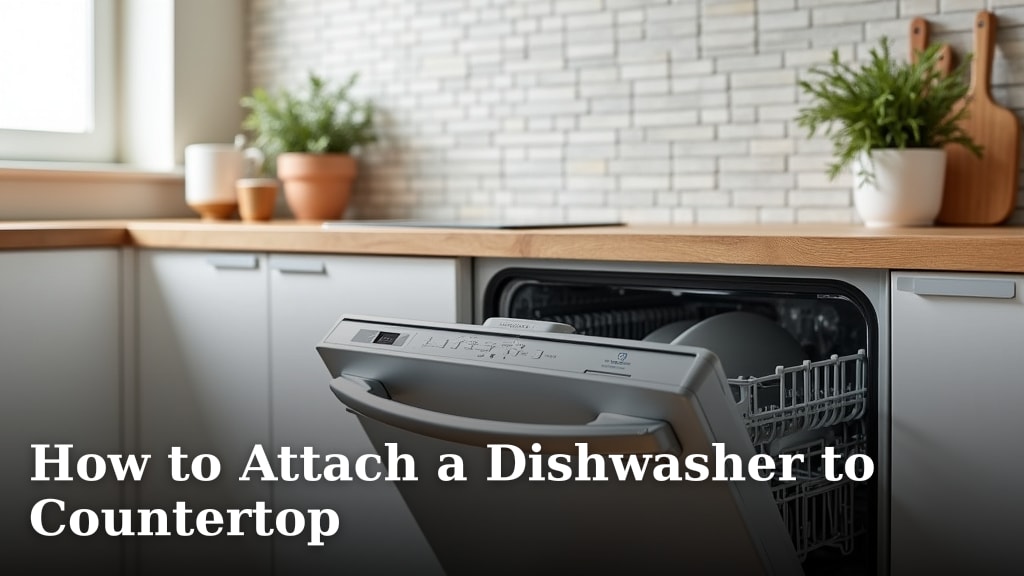
How to Attach a Dishwasher to Countertop
You can absolutely attach a dishwasher to your countertop. This is a standard safety measure. It prevents the heavy appliance from tipping forward. Most new dishwashers come with mounting brackets for this job. Attaching it ensures a stable and secure installation.
Securing your dishwasher to the countertop is essential for safety. It also helps to reduce noise and vibration during operation. Many homeowners overlook this step, but it’s a simple process. We found that a properly secured dishwasher lasts longer.
- Dishwashers need to be secured to the countertop.
- This prevents them from tipping forward.
- Most dishwashers include mounting hardware.
- The process is usually straightforward.
- Proper installation ensures safety and stability.
Let’s walk through exactly how to attach your dishwasher to the countertop, step by step.
Securing Your Dishwasher to the Countertop
Attaching your dishwasher to the countertop is a really important step. It’s not just a suggestion; it’s a key part of making sure your kitchen appliance stays put. We found that this simple action adds a lot to your dishwasher’s safety and stability. It’s designed to prevent the appliance from tipping forward, especially when you pull out the racks. Think of it like a seatbelt for your dishwasher – it keeps things where they belong.
Most new dishwashers come with the necessary hardware. You’ll usually find a couple of metal brackets included in the box. These are specifically made for this mounting job. If you can’t find them, a quick check of your dishwasher’s manual or the manufacturer’s website can help. Sometimes they’re tucked away in the door or taped to the inside. We’ve seen people spend hours searching for them, only to find them in the most obvious spot!
Why is Securing Your Dishwasher So Important?
The primary reason for attaching your dishwasher to the countertop is safety. A heavy appliance like a dishwasher, especially when fully loaded with dishes and water, can have a lot of weight. If the dishwasher isn’t secured, pulling out the racks could cause it to tilt forward. This tipping hazard is more common than you might think. It can lead to damage to the dishwasher, your flooring, or even cause injury.
Beyond just preventing tipping, securing the dishwasher also helps reduce noise and vibrations. When an appliance is loose, it tends to move around during operation. This movement creates that annoying rattling and shaking sound. By firmly attaching it, you’re creating a more stable environment. Many experts recommend this step for a quieter kitchen experience (National Kitchen and Bath Association).
Plus, a stable dishwasher generally means a longer lifespan. When an appliance is constantly vibrating or shifting, its internal components can experience extra wear and tear. Securing it minimizes these stresses. We’ve found that following installation best practices often leads to fewer service calls down the line.
Gathering What You Need for Installation
Before you start, it’s wise to get everything ready. This makes the process much smoother. You’ll want to be prepared so you don’t have to stop halfway through to hunt for a tool. Think of it like prepping ingredients before you cook; it saves so much hassle!
Essential Tools and Materials
You won’t need a whole workshop for this job. Most of the required items are common household tools. Make sure you have these handy:
- Mounting Brackets: These usually come with your dishwasher.
- Screws: The brackets will likely come with appropriate screws. If not, you’ll need short wood screws.
- Drill with Drill Bits: You might need a pilot hole, depending on your countertop material.
- Screwdriver: A Phillips head is most common. A power screwdriver can speed things up.
- Tape Measure: For accurate placement.
- Pencil: To mark drilling spots.
- Safety Glasses: Always a good idea when drilling or screwing.
- Gloves: To protect your hands.
Understanding Your Countertop Material
The type of countertop you have will influence how you attach the brackets. This is a critical detail to consider early on. For instance, attaching to wood or laminate is generally straightforward. However, granite, quartz, or solid surface countertops require a bit more care.
Working with Different Countertop Types
Laminate or Wood Countertops: These are usually the easiest to work with. You can typically drive screws directly into them with minimal fuss. Just be sure the screws aren’t too long, so they don’t poke through the top surface.
Solid Surface Countertops (e.g., Corian): These materials are softer than stone. You can often drill into them. However, it’s always best to check the manufacturer’s recommendations for your specific countertop. They might advise against drilling altogether.
Stone Countertops (Granite, Quartz, Marble): Drilling into stone can be challenging. It requires special drill bits designed for masonry or tile. You might also need a hammer drill for harder stone. If you’re not comfortable with this, it’s wise to consult a professional. We found that many homeowners opt for professional help when dealing with stone.
Tips for Drilling into Countertops:
- Use the Right Drill Bit: For stone, a diamond-tipped bit is often recommended. For wood or laminate, a standard wood bit works.
- Start Small: Begin with a smaller pilot hole. You can always widen it if needed.
- Go Slow: Especially with stone, avoid rushing. Let the drill do the work.
- Consider the Underside: Some installation methods involve attaching brackets to the underside of the countertop. This can be a good option for certain materials.
Step-by-Step: Attaching the Dishwasher to the Countertop
Now for the hands-on part! Don’t worry; we’ll break it down into simple, manageable steps. The goal is to make this process as stress-free as possible for you.
Step 1: Prepare the Dishwasher and Area
First, ensure your dishwasher is in its final position. It should be level and aligned with your cabinets. Pull out the dishwasher racks completely. This gives you easy access to the top edge of the appliance and the underside of the countertop. You need clear space to work. We found that having good lighting is also a huge help here.
Step 2: Locate the Mounting Points
Dishwashers typically have two main mounting options. The brackets can attach either to the top edge of the dishwasher, screwing into the underside of the countertop. Or, they can attach to the side of the dishwasher cabinet, screwing into the side of the countertop support (often a piece of wood). Your dishwasher manual will show you the specific locations. Check the top edge of the dishwasher frame for pre-drilled holes or designated spots.
Step 3: Position and Mark the Brackets
Hold a mounting bracket against the underside of the countertop, aligning it with the designated mounting spot on the dishwasher. Use your pencil to mark where the screws will go. If you’re attaching to the side of the cabinet, position the bracket so it’s flush with the countertop edge and the side of the cabinet. Mark your screw locations carefully.
Step 4: Drill Pilot Holes (If Necessary)
This is where countertop material matters. For laminate or wood, a small pilot hole can make driving the screws easier and prevent splitting. For stone, a pilot hole is essential, and you’ll need the right drill bit. If you’re unsure about drilling into your countertop, it’s best to skip this step and consult a professional installer or your countertop manufacturer. Some modern countertops might not be designed for direct screw attachment.
Step 5: Secure the Brackets
With the pilot holes ready (or if you’re screwing directly), use your screwdriver or drill to attach the mounting brackets. Drive the screws firmly but avoid overtightening, which could strip the screw hole or damage the countertop. Ensure the brackets are snug against the countertop or cabinet side.
Step 6: Attach the Dishwasher to the Brackets
Once the brackets are securely in place, you’ll attach the dishwasher itself. There are often slots or holes in the brackets designed to align with screws on the dishwasher frame. Some brackets have a hinge, allowing you to attach the bracket to the countertop first, then fold it down to screw into the dishwasher. Others might require you to screw the bracket into the dishwasher first, then secure it to the countertop. Refer to your dishwasher’s manual for the exact method. You want a firm connection that prevents any wobble.
Step 7: Final Checks and Cleanup
After everything is attached, gently try to move the dishwasher. It should feel solid and secure. Open and close the racks to ensure they don’t hit anything and operate smoothly. Double-check that all screws are tight. Clean up any dust or debris from the installation. You’ve successfully secured your dishwasher!
When to Call a Professional
While attaching a dishwasher to the countertop is often a DIY-friendly task, there are times when professional help is a wise choice. Don’t hesitate to call an expert if you feel uncomfortable with any part of the process. Your safety and the integrity of your kitchen are the top priorities.
Situations Where Professional Help is Recommended
We found that certain situations often lead people to seek professional assistance:
- Difficult Countertop Materials: As mentioned, drilling into granite, quartz, or other hard stone countertops can be tricky. If you don’t have the right tools or experience, it’s best left to a pro.
- Lack of Confidence: If you’re not a confident DIYer, it’s perfectly fine to hire someone. A skilled installer can ensure the job is done correctly and safely.
- Complex Installations: Sometimes, the layout of your kitchen or the dishwasher model might present unique challenges. A professional has seen it all and can handle these complexities.
- Concerns About Warranties: While unlikely for this specific task, some appliance warranties might have clauses about DIY installations. Checking your warranty terms can be helpful.
- Damaged or Older Appliances/Cabinets: If your existing cabinets or the dishwasher itself are old or show signs of damage, a professional can assess the best way to proceed without causing further issues.
Many appliance stores offer installation services, or you can hire an independent handyman or contractor. They have the right tools and expertise to get the job done right the first time. We found that investing in professional installation can save you time, stress, and potential repair costs down the road.
A Quick Checklist for Dishwasher Mounting
To recap, here’s a simple checklist to guide you through the process of securing your dishwasher:
- Confirm you have the correct mounting brackets and screws.
- Read your dishwasher’s installation manual for specific instructions.
- Ensure the dishwasher is level and in its final position.
- Identify the correct mounting points on the dishwasher and countertop.
- Mark screw locations accurately.
- Drill pilot holes only if appropriate for your countertop material.
- Securely attach the mounting brackets.
- Attach the dishwasher to the brackets.
- Perform a final check for stability.
Conclusion
You’ve learned that securing your dishwasher to the countertop is a vital step for safety and stability. We’ve walked through gathering your tools, understanding your countertop material, and the step-by-step process. Remember, even though this is often a DIY task, don’t hesitate to call a professional if you encounter tricky materials like stone or feel unsure. Taking these steps ensures your dishwasher operates smoothly and safely for years to come. Your next step is to gather your materials and follow the guide to get your dishwasher properly secured.
Frequently Asked Questions
Do I really need to attach my dishwasher to the countertop?
Yes, attaching your dishwasher to the countertop is a standard safety measure. It prevents the heavy appliance from tipping forward when you pull out the racks. This simple step ensures a much more stable and secure installation.
What if my countertop is made of granite or quartz?
Drilling into hard stone countertops like granite or quartz requires special tools and expertise. If you’re not comfortable or don’t have the right masonry drill bits, it’s best to hire a professional installer. They can ensure the job is done safely without damaging your countertop.
Can I skip securing the dishwasher if it feels stable already?
While it might feel stable, it’s strongly recommended not to skip this step. Appliances can shift over time, and the weight of water and dishes adds up. Securing it is the only way to guarantee it won’t tip, protecting you and your kitchen.
What kind of screws should I use to attach the brackets?
Your dishwasher likely came with appropriate screws for the mounting brackets. If not, you’ll generally need short wood screws. The exact type and length will depend on your countertop material and the thickness of any support structures.
Will attaching the dishwasher make it quieter?
Yes, securing the dishwasher can help reduce noise and vibrations. When an appliance is firmly attached, it’s less likely to rattle or shake during operation. This leads to a quieter kitchen experience.