How Loud Is a Countertop Dishwasher in Everyday Use?
A countertop dishwasher is generally quiet, operating between 40 to 50 decibels. This noise level is similar to a normal conversation or a quiet refrigerator. You can comfortably run it while watching TV or having a chat without much disturbance.
However, the exact sound can vary. Factors like the machine’s age, installation, and cycle chosen affect the noise. Many experts and user reports agree that modern models are designed to be unobtrusive in everyday use.
- A countertop dishwasher is typically between 40 and 50 decibels loud.
- That is similar to the sound of a quiet conversation or a refrigerator hum.
- Noise levels depend on the model, age, and cycle you use.
- Most modern units are quiet enough to run while you are in the same room.
- Proper installation can help keep the noise down even more.
Below, we break down everything you need to know about the noise of a countertop dishwasher. Let’s walk through how it sounds in real life and what to expect.
Understanding the Noise Levels of Countertop Dishwashers
So, you’re picturing the hum of a new countertop dishwasher in your kitchen. How loud will it really be when you’re making coffee or trying to hear the news? In everyday use, these compact machines are designed to be **quiet neighbors**. Most fall in a range that allows you to carry on with your day without shouting over them. Let’s explore what that really means in practical terms.
Decibel Levels Explained: From a Whisper to a Conversation
Sound is measured in decibels (dB), and understanding the scale helps you judge the noise. A **30 dB** sound is like a soft whisper. **60 dB** is a normal conversation. A vacuum cleaner might hit **70-80 dB**. Now, where does your countertop dishwasher fit?
What 40-50 Decibels Actually Sounds Like
The typical range for these appliances is **40 to 50 dB**. This is the sweet spot for quiet operation. Think of it as the sound of a **running refrigerator** or a **quiet library**. Many users report they can watch TV in the same room without turning up the volume. It’s a background hum, not a disruptive roar.
A Quick Sound Comparison
To give you a better picture, here’s a table of common household sounds:
| Sound | Approximate Decibels (dB) |
|---|---|
| Rustling Leaves | 20 dB |
| Quiet Refrigerator | 40 dB |
| Countertop Dishwasher (Normal Cycle) | 40 – 50 dB |
| Normal Conversation | 60 dB |
| Busy Traffic (from inside a car) | 70-80 dB |
As you can see, your dishwasher is designed to blend in with other quiet kitchen appliances. It’s unlikely to be the loudest thing in your room.
Key Factors That Influence the Noise You Hear
Noise isn’t just about the decibel number on the spec sheet. Your real-world experience can change based on several things. Let’s break them down so you know what to expect.
The Model and Its Age
Newer models are often engineered with better sound insulation and vibration-dampening technology. We found that premium brands often highlight their low-decibel ratings as a feature. An older or budget model might have a slightly more noticeable sound profile, especially as parts wear over time.
The Cycle You Choose
Just like a full-sized dishwasher, different cycles make different noises. The **”Normal” or “Eco” cycle** is typically the quietest because the motor and sprayers run at a steady, efficient pace. The **”Quick Wash” or “Intensive” cycle** uses higher water pressure and faster motor speeds, which can increase the noise level. You might hear more swooshing and a higher-pitched motor whine during these aggressive cycles.
Installation and Placement Matter
Where you put your dishwasher plays a big role in what you hear. The surface it sits on is crucial. A sturdy, solid countertop will absorb vibration. A lightweight or hollow shelf might amplify it. Also, ensure the unit is level and not touching the backsplash or cabinets. Any contact can cause rattling sounds that seem louder than the machine itself. Proper setup is a simple way to minimize unnecessary noise.
How to Measure the Noise Yourself
You don’t need fancy lab equipment to get a sense of the noise. There are simple steps you can take. This helps you compare models or just understand your own machine better.
Using a Sound Meter App
Many free smartphone apps can measure sound levels in decibels. They aren’t as precise as professional meters, but they give you a very good estimate. Try this:
- Open the app and place your phone on the counter, about 3 feet from the dishwasher.
- Start a normal wash cycle and let it run for a few minutes.
- Watch the app’s reading. The number will fluctuate, so note the average or peak sound during the main wash.
This simple test can confirm the manufacturer’s claims or help you decide if a new model would be quieter than your current one.
Everyday Scenarios: Living with the Hum
So, how does this noise fit into your actual life? Let’s imagine a couple of common situations.
In an Open Kitchen and Living Space
If your kitchen is part of an open-plan living area, the dishwasher’s sound will carry. At 45 dB, it will be a background presence while you chat, cook, or listen to music. You’ll likely **tune it out** within minutes. For most people, it becomes part of the household white noise.
In a Small Apartment or Near a Bedroom
If the machine is close to where you sleep or relax, you might be more sensitive to it. Running it during the day is the obvious solution. If you need to run it overnight, look for models specifically advertised with a **”night mode”** or extra-quiet cycle. These often run at the lower end of the decibel scale.
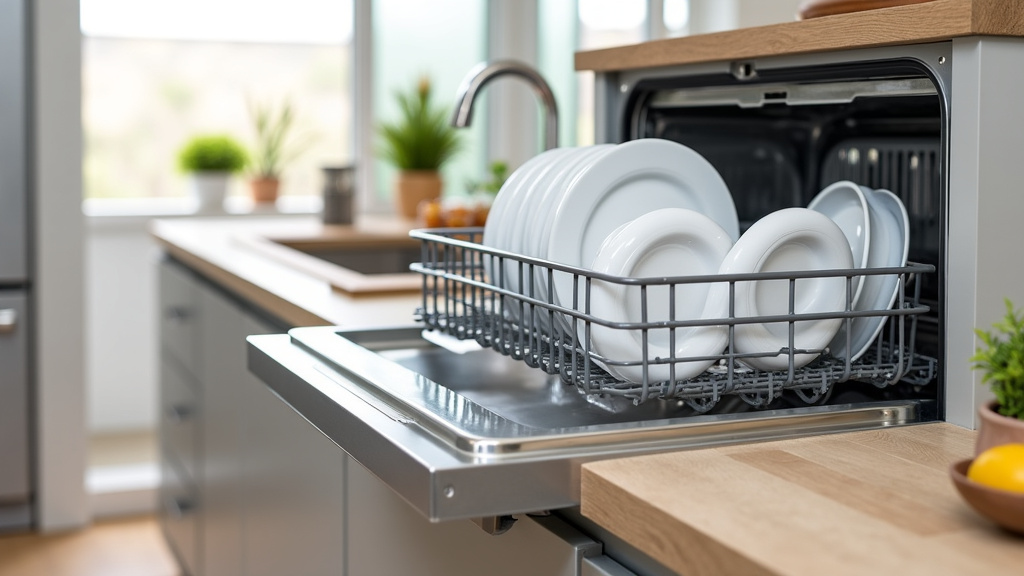
Practical Tips to Minimize the Noise
Want to keep the peace in your kitchen? Here are some proven strategies to ensure your countertop dishwasher runs as quietly as possible.
- Choose a stable surface. Place it on a solid, non-hollow countertop.
- Use a vibration-dampening mat. A thin rubber mat underneath can absorb vibrations and reduce rattling.
- Ensure a proper installation. Make sure hoses aren’t kinked and the unit is level.
- Load the dishes properly. Avoid overloading, which can cause imbalance and more motor strain.
- Select the right cycle. Use “Normal” or “Eco” for your everyday washes to keep noise down.
- Maintain your machine. A clean filter and smooth-running spray arms prevent extra strain and noise.
What Real Users and Experts Say
When we looked at user reviews and expert tests, a pattern emerges. Many users of popular models from brands like Farberware, Danby, or Midea mention the noise is **unobtrusive or low**. They often compare it to a conversation or a fan. One common sentiment is, “You know it’s on, but it doesn’t bother you.”
Consumer Reports, which tests appliances extensively, consistently notes that countertop dishwashers are among the quieter kitchen appliances available. Their findings often place them well below the noise level of a standard microwave. The consensus is clear: for everyday chores, these machines are designed to be heard but not hated.
Your Noise Tolerance Checklist
Everyone’s sensitivity to sound is different. Before you buy or worry, ask yourself these questions.
- Will the dishwasher be in an open area where you spend a lot of time?
- Do you plan to run it late at night or early in the morning?
- Do other household sounds (HVAC, refrigerator) easily distract you?
- Is the model you’re considering advertised with a specific low decibel rating?
- Have you checked recent user reviews to see comments on noise?
Answering these will help you decide if a specific model’s noise level is a perfect fit for your home and habits. You deserve a kitchen helper that works hard without making a fuss.
Conclusion
You’ve seen that a countertop dishwasher’s noise is generally **not a major concern**. Most models operate in a comfortable 40-50 decibel range, blending in like a quiet refrigerator. Your real-world experience will depend on the specific model, the cycle you choose, and proper placement. By selecting a stable surface and using the normal cycle, you can keep the hum very manageable. For your next step, consider downloading a free sound meter app. This lets you **benchmark the noise** of your current setup or compare it to a model you’re considering, giving you confidence in your choice.
Frequently Asked Questions
Can I run a countertop dishwasher in a studio apartment while sleeping?
It depends on your noise sensitivity and the model. While a standard 45 dB cycle is quiet, it may still be audible in a very small, quiet space. For sleeping, look for a model with a specific **”night” or “extra-quiet” mode**, which often runs at the lower end of the sound scale. Running it before you go to bed is the most reliable strategy.
How does the noise of a countertop dishwasher compare to a full-sized one?
Countertop models are typically **quieter than many older full-sized dishwashers**. Full-sized machines have larger pumps and spray arms that can create more noise. However, modern full-sized dishwashers with advanced insulation are often very quiet as well, sometimes even quieter than countertop units. The specific decibel rating is the best number to compare.
Does a countertop dishwasher get louder as it ages?
Potentially, yes. Over time, **worn parts, loose fittings, or scale buildup** can increase vibration and noise. This is true for most appliances. Regular maintenance, like cleaning filters and ensuring spray arms move freely, can help keep your unit running quietly for years.
What’s the main cause of annoying rattle sounds?
The most common cause is **improper installation or an unstable surface**. If the dishwasher isn’t level or touches the cabinets or backsplash, vibrations will transfer and create rattling. Placing it on a solid countertop and using a **vibration-dampening mat** are excellent solutions to eliminate this type of noise.
Are “quiet” or “silent” dishwasher cycles actually much quieter?
Yes, they usually are. These cycles use **slower motor speeds and lower water pressure** to minimize sound. The trade-off is often a longer wash time. If noise reduction is your top priority, especially for evening use, choosing this cycle is a very effective strategy.